When a child gets sick, it is rarely just their body that needs care. Suddenly your independent big kid wants to be carried everywhere, your easygoing toddler dissolves into tears over the wrong color cup, and bedtime routines you thought were long settled come undone. None of this means you are doing anything wrong. Feeling unwell is a big, confusing experience for a little person, and the clinginess, regression, and frustration that come with it are simply how children tell us they need extra comfort.
Kids do not have the words or the perspective adults have. They cannot say "I feel achy and tired and a little scared because my body does not feel like mine today." Instead, they show us - with tears, with whining, with wanting to be held, with behavior that seems younger than their age. When you can read those signals as communication rather than misbehavior, sick days become a little gentler for everyone.
This post is about the emotional side of sick days: how to validate big feelings, stretch your own patience, keep connection alive through quiet togetherness, and notice the behavior changes that are worth mentioning to your pediatrician.
🌧️ Why Sick Days Bring Out Big Feelings
Illness is disorienting for children. Their body feels strange, their routine is upside down, and they often cannot do the things that usually help them feel capable and in control. Big feelings are a natural response to all of that, not a discipline problem.
- Expect more tears, whining, and frustration than usual, and remind yourself it is temporary.
- Treat clinginess as a request for safety, not a bad habit forming.
- Remember that discomfort lowers everyone's coping skills - including yours.
- Lower the bar on non-essential rules for a few days, like perfect table manners or tidy playrooms.
🐾 When Your Big Kid Suddenly Seems Little Again
Regression is one of the most common and most surprising parts of sick days. A potty-trained child may have accidents, a confident sleeper may want to be rocked, and a chatty preschooler may go back to baby talk. This backward slide is normal and almost always temporary.
- Respond to regression with warmth instead of correction or teasing.
- Offer the extra help they are asking for, even if they "know how" to do it themselves.
- Avoid launching new milestones or big transitions while your child is unwell.
- Trust that skills come back on their own once your child feels better.
💬 Validate First, Fix Second
When a child is melting down, our instinct is often to solve or distract. But sick kids mostly need to feel understood. Naming the feeling out loud helps a child feel less alone inside it, and often shortens the storm.
- Say what you see in simple words, like "You feel yucky and that is so hard."
- Resist arguing with feelings, even unreasonable ones - comfort now, teach later.
- Offer small choices to restore a sense of control, like which pajamas or which story.
- Keep your voice slow and low, because your calm tone does more than your exact words.
🧸 Comfort Objects and Simple Explanations
Children cope better when the world feels predictable, and a sick day is anything but. Familiar objects and simple, honest language about what is happening can shrink the fear that hides underneath fussiness.
- Keep their favorite stuffed animal, blanket, or lovey within arm's reach all day.
- Explain what is happening in short, honest sentences, like "Your body is working hard to feel better."
- Preview what comes next, such as "First rest, then a story, then we check how you feel."
- Answer their questions honestly and simply, and it is okay to say "I don't know, we can ask the doctor."
🤍 Connection Through Quiet Togetherness
You do not need to entertain a sick child all day. What they need most is your presence. Low-energy togetherness tells your child "you are safe and I am here" without demanding anything from either of you.
- Build a cozy nest on the couch and simply sit together, even in silence.
- Read familiar books rather than new ones, because familiarity is soothing.
- Try quiet parallel activities, like coloring side by side or listening to soft music.
- Save screen time as one tool among many, and stay close by while it is on.
📝 Notice and Note Behavior Changes
A child's behavior is part of the story of their illness, and you are the world's leading expert on your child's normal. Jotting down what you notice - unusual sleepiness, irritability, changes in eating, drinking, or play - gives your pediatrician valuable context that a thermometer alone cannot.
- Write down behavior changes as you notice them, with a rough time attached.
- Note what comforts your child and what does not, since that is useful information too.
- Track patterns across the day, like whether mornings or evenings seem harder.
- Share your notes with your pediatrician, and contact them promptly about anything that worries you.
💛 Be Gentle with Yourself Too
Caring for a sick, emotional child is genuinely exhausting. Your patience is a finite resource, and it is okay to protect it. A steady, mostly-calm parent is worth far more to a sick child than a perfect one.
- Tag in another caregiver for short breaks when you can.
- Lower your own expectations for chores, work, and screen-time rules today.
- Take three slow breaths before responding to the tenth meltdown of the morning.
- Remind yourself that comfort, not perfection, is the job right now.
✅ Quick Action Plan
- Name your child's feelings out loud once today instead of correcting the behavior.
- Gather their comfort objects into one cozy spot within easy reach.
- Explain the sick day in one simple sentence, like "Your body is working hard to get better."
- Plan one quiet togetherness activity, like reading a familiar book side by side.
- Jot down any behavior changes you notice to share with your pediatrician.
- Schedule one small break for yourself, even ten minutes counts.
This article is for educational purposes only and is not medical advice. Every child is different, so always consult your pediatrician or a qualified healthcare professional with any questions about your child's health, symptoms, or care, and seek urgent care right away for any emergency or warning signs.
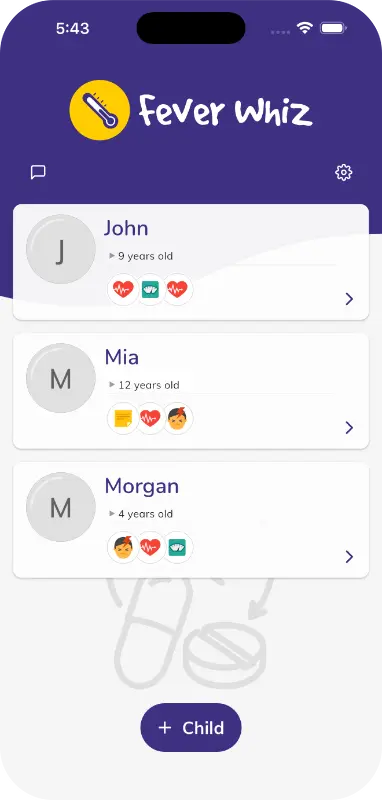
When the big feelings are flowing, the last thing you need is to reconstruct the day from memory. Fever Whiz makes it easy to log temperatures, symptoms, and those little behavior notes as they happen, set gentle reminders, and see trends at a glance. Best of all, it syncs a real-time care timeline with everyone caring for your child, so you can focus on the cuddles while the record keeps itself.