There is a certain crispness in the air lately. The leaves are turning, the days are getting shorter, and our calendars are filling up with cozy plans. But as parents, we know that the arrival of autumn also signals the approach of cold-and-flu season.
It can feel a little daunting, can’t it? The thought of sleepless nights, cranky little ones, and the general disruption that illness brings to a household. But take a deep breath. Being prepared isn't about worrying; it’s about finding peace of mind. When we have a plan in place, we feel more grounded, and that calm energy is exactly what our children need most when they aren’t feeling their best.
Here is a gentle guide to organizing your home and heart before the season shifts, so you can focus on what matters most: comforting your child.
1. Stock Up on Comfort Essentials
Before the first sniffle hits, it’s nice to do a quick inventory of your home. This isn't about hoarding supplies, but simply having the "comfort tools" on hand so you don't have to run out to the store at 10 PM.
- Hydration: Check your cupboards for electrolyte drinks or popsicles that can be soothing for a sore throat. Having a favorite water bottle cleaned and ready helps encourage sipping.
- Thermometers: Ensure your thermometer is working and you have fresh batteries. Knowing your child’s temperature is a key piece of information to share with your pediatrician.
- Comfort Items: Fresh soft pajamas, extra cozy blankets, and perhaps a few quiet activities like coloring books or new read-aloud books can make resting easier.
- *Cleaning Supplies: * Stock up on gentle hand soaps and surface cleaners. Keeping high-touch areas clean is a great habit for the whole family.
A Note on Medications: Check your existing bottles to ensure they aren't expired. Always consult your pediatrician regarding which medications are appropriate for your child’s age and weight, and strictly follow their dosing instructions. Never guess on a dose. If you are unsure, call your doctor’s office before giving anything.
2. Create a "Care Station"
When a child is unwell, organization goes a long way. Designate a small basket or a specific drawer as your "Care Station." This prevents you from scrambling to find things when you are tired.
In this basket, you might keep: * Tissues and a small trash bag. * A notepad and pen (more on this below!). * Lip balm or lotion for chapped noses. * Your phone charger, so you’re never scrambling for battery life while on a call with the nurse.
3. The Power of Observation and Note-Taking
One of the most helpful things you can do as a parent is simply observe. Kids change quickly, and having a record of their symptoms is incredibly valuable when you talk to a doctor.
Instead of relying on your memory (which is hard to do at 3 AM), write things down. Jot notes like: * "Fever started at 2:00 PM." * "Coughing seems worse after napping." * "Drank half a cup of water at 4:00 PM." * "Last dose of medication given at 8:00 AM."
This log helps you see patterns and gives your pediatrician a clear picture of how the illness is progressing.
4. Preparing for the Pediatrician Visit
You know your child best. When you call or visit the pediatrician, your goal is to be an effective communicator. Before you call, glance at your notes.
- Have your facts ready: Know the duration of the symptoms and any key changes in behavior or appetite.
- Write down your questions: It’s easy to forget what you wanted to ask once you are on the phone or in the exam room. Write them down beforehand.
- Know the Warning Signs: Ask your pediatrician ahead of time what specific signs they want you to watch for that would require an urgent call or visit. If your child shows signs of dehydration, difficulty breathing, or extreme lethargy, seek urgent medical care immediately.
5. Coordinating Care Among Caregivers
If you are parenting with a partner, co-parenting, or relying on grandparents or a nanny to help, communication is key. Nothing is more stressful than two people trying to remember who gave the last dose of medicine or when the fever broke.
Agree on a system to share information in real-time. This prevents double-dosing or missed doses and ensures everyone is on the same page. A shared digital log can be a lifesaver here, allowing everyone to see the timeline of care without waking each other up constantly.
6. Don't Forget to Care for Yourself
This is the part we often skip. You cannot pour from an empty cup. When a child is sick, the house often gets quiet, and the focus shifts entirely to them. But you need fuel, too.
- Hydrate and Rest: Try to nap when they nap if possible. Keep water and snacks nearby for yourself.
- Ask for Help: If a friend offers to drop off soup or pick up siblings from school, say yes.
- Be Gentle with Yourself: The laundry might pile up. The dishes might wait. That is okay. Your only job right now is to keep your little one comfortable and loved.
Disclaimer
This blog post is for general educational and informational purposes only and does not constitute medical advice. Fever Whiz is NOT a medical device. The content provided is not intended to be a substitute for professional medical advice, diagnosis, or treatment. Always seek the advice of your pediatrician or other qualified health provider with any questions you may have regarding a medical condition or medication dosing. Never disregard professional medical advice or delay in seeking it because of something you have read here. If you think you may have a medical emergency, call your doctor or emergency services immediately.
A Little Help Staying Organized
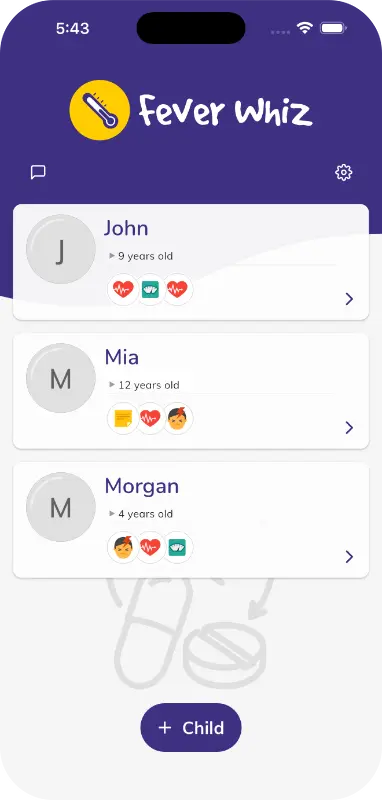
If the idea of keeping a handwritten log feels overwhelming, or if you want to make sure every caregiver is perfectly synced, consider using the Fever Whiz app.
Fever Whiz is a free, private record-keeping tool designed by parents, for parents. It helps you log temperatures, symptoms, and medications, set smart reminders so you never miss a dose, and visualize trends with easy-to-read charts. You can even store important medical documents and share a real-time care timeline with your partner or babysitter, so everyone stays informed. It’s a simple way to bring a little order to a stressful day, letting you focus on the cuddles.